 (888) 999-1405
A Beginner’s Guide to Reading Your Business Balance Sheet
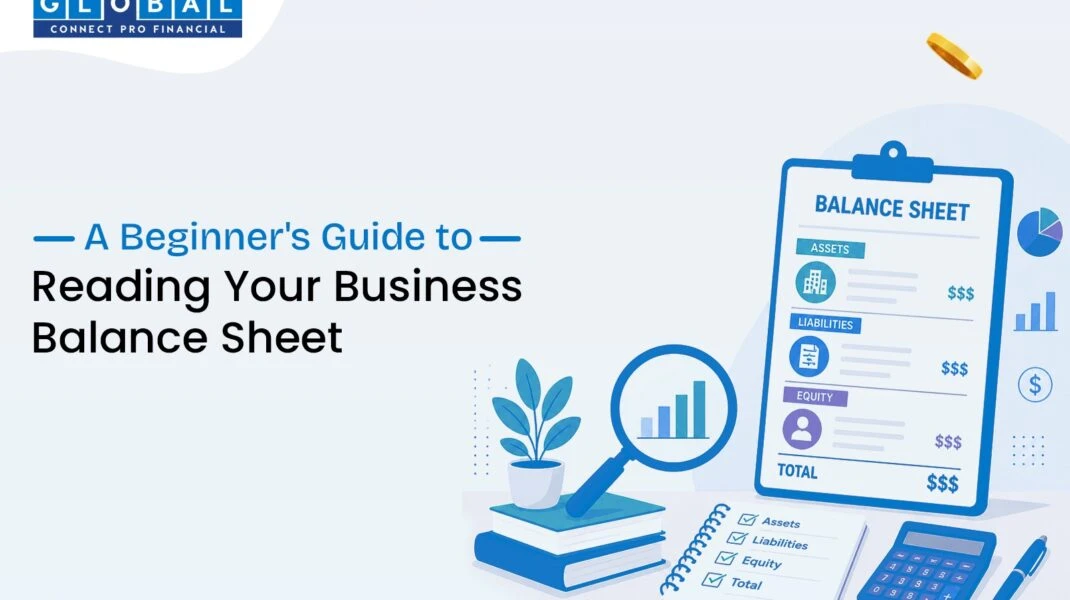
A balance sheet is one of the most important financial reports every business owner should understand. Yet, many entrepreneurs look at one and see nothing more than a collection of numbers.
The good news? You don’t need an accounting degree to read a business balance sheet confidently.
Whether you’re running a startup, managing a growing company, applying for financing, or simply trying to understand your financial position, learning how to interpret a balance sheet helps you make better business decisions.
In this beginner’s guide, you’ll learn what a balance sheet is, how it’s structured, what each section means, the financial ratios professionals use, and the common mistakes to avoid.
✓
Quick Answer
How to Read a Business Balance Sheet
A business balance sheet shows your assets, liabilities, and owner’s equity. Check that assets equal liabilities plus equity, then review cash, debt, and financial ratios to understand your company’s financial health and make informed business decisions.
What Is a Business Balance Sheet?
A business balance sheet is a financial statement that provides a snapshot of your company’s financial position at a specific point in time.
It shows:
- What your business owns (Assets)
- What your business owes (Liabilities)
- What belongs to the owners (Owner’s Equity)
Unlike an income statement that measures performance over time, the balance sheet represents your business on a particular date.
The Basic Accounting Equation
Every balance sheet follows one simple formula:
Assets = Liabilities + Owner’s Equity
This equation must always balance, which is why it’s called a “balance sheet.”
Why Learning to Read a Business Balance Sheet Matters
Understanding your balance sheet helps you:
- Measure your company’s financial health
- Identify cash flow risks
- Prepare for loan applications
- Attract investors
- Make smarter budgeting decisions
- Track business growth
- Monitor debt levels
- Improve financial planning
Business owners who regularly review their balance sheets often spot financial issues before they become major problems.
The Three Main Sections of a Balance Sheet
| Section | What It Shows | Examples |
|---|---|---|
| Assets | Everything your business owns | Cash, inventory, equipment |
| Liabilities | Everything your business owes | Loans, accounts payable |
| Owner’s Equity | Owner’s investment and retained earnings | Capital, retained profits |
Let’s explore each section in detail.
Understanding Assets
Assets are resources your business owns that provide future economic value.
Current Assets
Current assets can usually be converted into cash within one year.
Examples include:
- Cash
- Bank balances
- Accounts receivable
- Inventory
- Prepaid expenses
- Short-term investments
Businesses with healthy current assets generally have stronger liquidity.
Non-Current Assets
These are long-term assets used to operate the business.
Examples include:
- Buildings
- Machinery
- Vehicles
- Office equipment
- Patents
- Trademarks
- Software
- Long-term investments
These assets usually generate value over many years.
Understanding Liabilities
Liabilities represent money your business owes to others.
Current Liabilities
These obligations are due within one year.
Examples:
- Accounts payable
- Payroll taxes
- Short-term loans
- Credit card balances
- Accrued expenses
Managing current liabilities effectively helps maintain healthy cash flow.
Long-Term Liabilities
These debts are due after one year.
Examples include:
- Business loans
- Equipment financing
- Commercial mortgages
- Lease obligations
Long-term debt often supports business expansion but should remain manageable.
Understanding Owner’s Equity
Owner’s equity represents the value remaining after liabilities are deducted from assets.
It usually includes:
- Owner’s capital
- Additional investments
- Retained earnings
- Current year profits
Growing equity often indicates a financially healthy business.
How to Read a Business Balance Sheet Step by Step
If you’re trying to read a business balance sheet, follow this simple process.
Step 1: Review Total Assets
Ask yourself:
- Are assets increasing?
- Is cash growing?
- Is inventory too high?
- Are customers paying invoices on time?
Growing assets often suggest business expansion, but they should be supported by healthy cash flow.
Step 2: Examine Total Liabilities
Look for:
- Rising debt
- Increasing short-term obligations
- Heavy loan dependence
- Large unpaid supplier invoices
High liabilities are not always bad, but they should be proportional to business growth.
Step 3: Analyze Owner’s Equity
Increasing equity generally signals:
- Consistent profitability
- Strong retained earnings
- Healthy financial management
Declining equity may indicate ongoing losses or excessive owner withdrawals.
Step 4: Compare Multiple Balance Sheets
Never analyze only one reporting period.
Compare:
- Month-over-month
- Quarter-over-quarter
- Year-over-year
Trend analysis provides much deeper insights than reviewing a single report.
Example Balance Sheet
| Assets | Amount |
|---|---|
| Cash | $45,000 |
| Accounts Receivable | $18,000 |
| Inventory | $32,000 |
| Equipment | $105,000 |
| Total Assets | $200,000 |
| Liabilities & Equity | Amount |
|---|---|
| Accounts Payable | $25,000 |
| Business Loan | $60,000 |
| Owner’s Equity | $115,000 |
| Total | $200,000 |
Notice how both sides equal $200,000.
Key Financial Ratios You Should Know
Financial ratios make it easier to interpret your balance sheet.
Current Ratio
Formula:
Current Assets ÷ Current Liabilities
Example:
$80,000 ÷ $40,000 = 2.0
Generally:
- Above 1.5 is healthy
- Below 1 may indicate liquidity concerns
Debt-to-Equity Ratio
Formula:
Total Liabilities ÷ Owner’s Equity
Lower ratios often indicate lower financial risk.
Working Capital
Formula:
Current Assets – Current Liabilities
Positive working capital means your business can typically meet short-term obligations.
Quick Ratio
Formula:
(Current Assets − Inventory) ÷ Current Liabilities
This ratio measures your ability to cover short-term obligations without relying on inventory sales.
Common Mistakes Beginners Make
Many first-time business owners misunderstand balance sheets.
Avoid these common mistakes:
- Looking only at cash
- Ignoring liabilities
- Confusing profit with cash flow
- Reviewing only one month’s report
- Ignoring financial ratios
- Not tracking trends over time
- Failing to reconcile accounting records
Warning Signs to Watch For
A balance sheet can reveal early signs of financial trouble.
Be cautious if you notice:
- Declining cash reserves
- Growing short-term debt
- Negative working capital
- High accounts receivable
- Excess inventory
- Falling owner’s equity
- Increasing reliance on borrowed funds
Early detection allows you to correct issues before they impact business operations.
Best Practices for Reading Your Balance Sheet
To get the most value from your financial statements:
- Review your balance sheet every month.
- Compare results with previous periods.
- Monitor key financial ratios.
- Investigate unusual changes.
- Reconcile bank accounts regularly.
- Keep financial records accurate.
- Use accounting software to automate reporting.
Consistent review builds confidence and supports better financial decisions.
How Lenders and Investors Use Balance Sheets
Banks, investors, and financial institutions often review your balance sheet before making funding decisions.
They typically assess:
- Liquidity
- Debt levels
- Cash reserves
- Asset quality
- Equity growth
- Financial stability
- Repayment capacity
A well-managed balance sheet can improve your credibility and increase financing opportunities.
FAQ,s
Q1. What is the easiest way to read a business balance sheet?
Ans. Start with the accounting equation: Assets = Liabilities + Owner’s Equity. Then review each section separately and compare current results with previous periods.
Q2. Why does a balance sheet always balance?
Ans. Because every business transaction affects at least two accounts, ensuring total assets always equal liabilities plus owner’s equity.
Q3. Is a balance sheet the same as an income statement?
Ans. No. A balance sheet shows financial position at a specific date, while an income statement reports revenue, expenses, and profit over a period of time.
Q4. How often should I review my balance sheet?
Ans. Most small businesses should review it monthly. Larger organizations may analyze it weekly or even daily depending on reporting needs.
Q5. Can a business have high profits but a weak balance sheet?
Ans. Yes. A company can be profitable while struggling with cash flow, excessive debt, or poor liquidity. That’s why reviewing both the income statement and balance sheet is important.
Final Thoughts
Learning how to read a business balance sheet is one of the most valuable financial skills a business owner can develop. It provides a clear view of your company’s financial health, helping you evaluate assets, manage liabilities, monitor equity, and make informed decisions.
Rather than viewing your balance sheet as a complex accounting document, treat it as a financial roadmap. Regular reviews, trend analysis, and key ratio monitoring can help you identify opportunities, reduce risk, and build a stronger, more resilient business.
Whether you’re preparing for growth, applying for funding, or simply aiming to improve financial management, understanding your balance sheet gives you the confidence to make smarter decisions backed by real financial data.