 (888) 999-1405
What Is a 1099-K and How It Affects Your Business Taxes
If you run a small business, sell products online, or work as a freelancer, you’ve probably heard about Form 1099-K. For many business owners, receiving this tax form creates unnecessary stress because they assume it automatically means they’ll owe more taxes.
The truth is much simpler.
A 1099-K doesn’t calculate your tax bill. Instead, it reports payment transactions processed through credit cards, debit cards, and third-party payment platforms. Understanding 1099-K form business taxes helps you report your income correctly, avoid IRS issues, and keep accurate financial records.
Whether you’re an online seller, independent contractor, or small business owner, here’s everything you need to know.
What Is Form 1099-K?
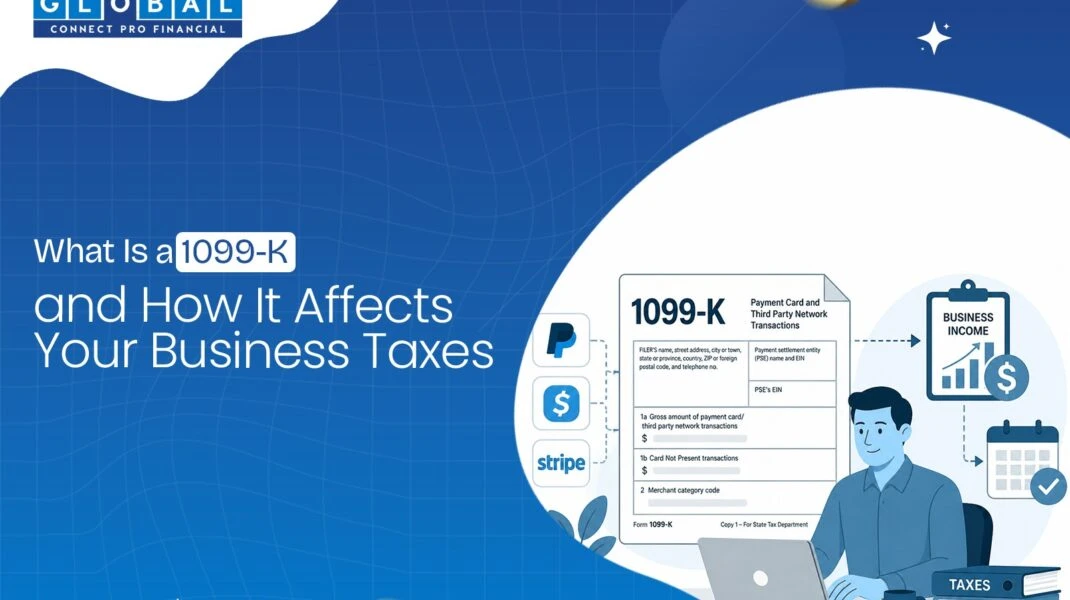
Form 1099-K is an IRS information return that reports payments you received through payment card transactions and third-party payment networks.
You may receive this form if customers pay you using platforms like:
- PayPal
- Stripe
- Square
- Shopify Payments
- Venmo (business transactions)
- Cash App (business accounts)
The purpose of Form 1099-K is to help the IRS verify that businesses accurately report their income.
Remember, the form reports gross payment amounts, not your actual profit.
Why Did You Receive a 1099-K?
Receiving a 1099-K simply means a payment processor reported your payment activity.
Common reasons include:
- You own an eCommerce store.
- You operate a small business.
- You freelance or consult.
- You accept online payments.
- You sell products through online marketplaces.
It doesn’t automatically mean you owe additional taxes.
Instead, it serves as another record that should match the income you report on your tax return.
How Does a 1099-K Affect Your Business Taxes?
This is where many business owners get confused.
Your 1099-K form business taxes are based on your taxable business income – not the number shown on your 1099-K.
Here’s the difference:
| Form 1099-K Reports | Your Tax Return Reports |
|---|---|
| Gross payment volume | Taxable business income |
| Before refunds | After deductions |
| Before fees | Net business income |
| Before expenses | Profit after expenses |
Because the form reports gross payments, the amount may be much higher than your actual taxable income.
Why Your 1099-K Amount May Not Match Your Income
Several factors can create differences between your 1099-K total and your accounting records.
These include:
- Customer refunds
- Payment processing fees
- Sales tax collected
- Chargebacks
- Shipping reimbursements
- Duplicate transactions
- Multiple payment platforms
This is why bookkeeping for small businesses is essential throughout the year. Keeping accurate financial records helps you reconcile your 1099-K, report the correct income, and avoid unnecessary tax filing errors.
Common Tax Mistakes to Avoid
Many businesses make simple reporting mistakes that can create unnecessary IRS questions.
Avoid these common errors:
Reporting the 1099-K as Additional Income
Your business income should only be reported once. Don’t add your 1099-K amount on top of income you’ve already recorded.
Ignoring Business Expenses
Even though the form reports gross payments, you’re still allowed to deduct eligible business expenses.
Examples include:
- Office supplies
- Marketing costs
- Software subscriptions
- Equipment purchases
- Business insurance
- Professional services
- Internet and phone expenses
Not Keeping Good Records
Maintain accurate records of your income, expenses, and accounts payable management, including vendor invoices and outgoing payments. Keep track of:
- Sales
- Refunds
- Receipts
- Business expenses
- Payment processor statements
- Bank deposits
These records help support your tax return if questions ever arise.
How to Prepare for Tax Season
Staying organized throughout the year makes tax filing much easier. One of the best ways to reduce stress is to use accurate financial data to improve tax planning.
Here are a few practical tips:
- Reconcile your payment processor reports monthly.
- Compare your accounting records with bank deposits.
- Separate personal and business finances.
- Save digital copies of receipts.
- Track deductible business expenses regularly.
- Review every 1099 form you receive before filing.
A little preparation can save hours of stress during tax season.
Who Should Pay Special Attention to Form 1099-K?
Form 1099-K is especially important for:
- Small business owners
- Freelancers
- Independent contractors
- eCommerce sellers
- Marketplace sellers
- Consultants
- Digital creators
- Service-based businesses
If you accept electronic payments, understanding how this form works is an important part of managing your taxes.
Frequently Asked Questions
Q1. Does receiving a 1099-K mean I owe more taxes?
No. The form simply reports payment transactions. Your tax liability depends on your actual taxable business income after eligible deductions.
Q2. What if my 1099-K amount is incorrect?
Contact the payment processor that issued the form as soon as possible. They may issue a corrected version if an error is confirmed.
Q3. Do I need to report income if I don’t receive a 1099-K?
Yes. You’re required to report all taxable business income, even if you don’t receive a Form 1099-K.
Q4. Can I deduct business expenses if I receive a 1099-K?
Absolutely. Eligible business deductions still reduce your taxable income, even though the form reports gross payments.
Final Thoughts
Understanding 1099-K form business taxes doesn’t have to be complicated. Think of Form 1099-K as an information document – not a tax bill. It helps the IRS verify payment activity, while your actual taxes are based on your business income after accounting for refunds, fees, and legitimate deductions.
The key to avoiding problems is maintaining accurate financial records throughout the year and reviewing every tax document before filing. If your records are organized, filing your taxes becomes much easier and far less stressful.
When in doubt, consult a qualified tax professional who can help ensure your return is accurate and that you’re claiming every deduction you’re entitled to.