 (888) 999-1405
The Difference Between Personal and Business Credit Scores Explained
If you’re applying for a business loan, line of credit, or business credit card, you’ve probably heard lenders mention both personal and business credit scores. Many entrepreneurs assume they’re the same thing – or that once they register an LLC, their personal credit no longer matters.
Unfortunately, that’s not how business financing works.
Your personal credit history and your business credit profile serve different purposes, but together they influence how lenders, banks, and financing companies evaluate risk. Even established businesses are often approved – or declined – based on a combination of both.
Understanding the difference between Personal and Business Credit Scores can help you qualify for better loan terms, higher credit limits, lower interest rates, and more financing opportunities as your business grows.
In this guide, we’ll explain exactly how both scoring systems work, their key differences, and practical ways to strengthen each one.
✓
Quick Answer
Personal vs. Business Credit Scores
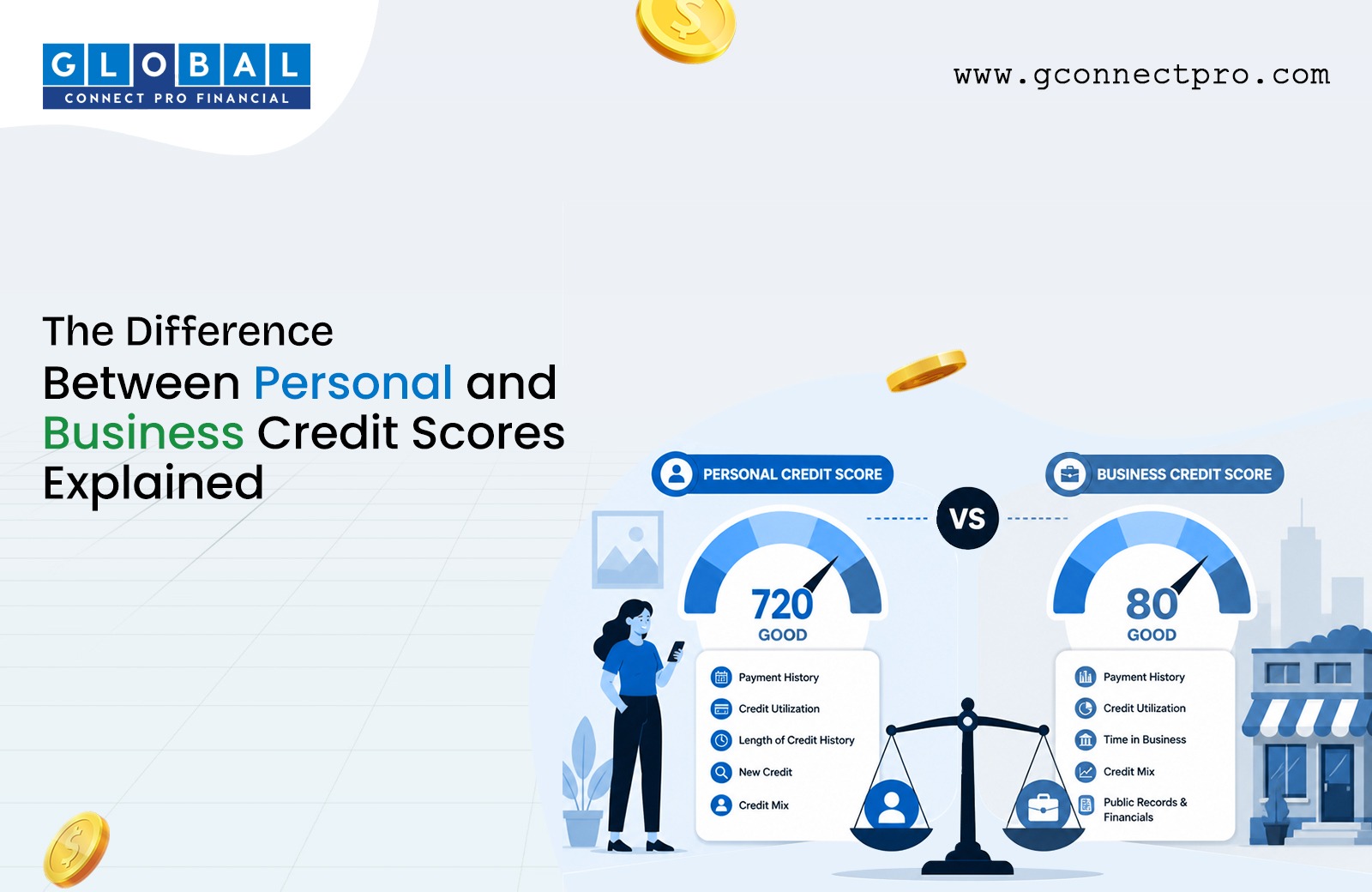
Personal credit scores evaluate your individual borrowing habits, while business credit scores assess your company’s financial reliability based on business payments and credit history.
Before approving financing, most lenders check both-particularly for startups, small businesses, and loans that require a personal guarantee.
What Is a Personal Credit Score?
A personal credit score is a numerical representation of your personal creditworthiness. It tells lenders how likely you are to repay borrowed money based on your financial history.
In the United States, personal credit scores generally range from 300 to 850, with higher scores indicating lower lending risk.
Personal credit scores are generated using information from major credit bureaus, including:
- Experian
- Equifax
- TransUnion
These scores are influenced by several factors, including:
Payment History
Making on-time payments consistently has the biggest impact on your credit score.
Late payments, collections, defaults, and bankruptcies can significantly reduce your score.
Credit Utilization
Using too much of your available credit signals financial stress.
Financial experts generally recommend keeping utilization below 30%, although staying below 10% is even better.
Length of Credit History
Older accounts help establish a stronger credit profile because they demonstrate long-term financial responsibility.
Credit Mix
Having different types of credit – such as mortgages, auto loans, and credit cards – can positively impact your score.
New Credit Applications
Applying for multiple loans or credit cards within a short period may temporarily lower your score.
What Is a Business Credit Score?
A business credit score reflects your company’s ability to manage financial obligations.
Instead of evaluating you personally, it measures how responsibly your business pays suppliers, vendors, lenders, and creditors.
Unlike personal credit, business credit is tied to your company’s Employer Identification Number (EIN) rather than your Social Security Number.
Business credit information is collected by agencies such as:
- Dun & Bradstreet
- Experian Business
- Equifax Business
Business credit scores consider factors like:
- Vendor payment history
- Business loan repayment
- Company age
- Industry risk
- Outstanding debt
- Public records
- Business size
- Financial stability
A strong business credit profile can help companies qualify for:
- Business term loans
- SBA loans
- Equipment financing
- Business lines of credit
- Trade credit
- Higher vendor limits
Personal vs. Business Credit Scores: Key Differences
| Feature | Personal Credit Score | Business Credit Score |
|---|---|---|
| Linked To | Individual | Business Entity |
| Identification | Social Security Number | EIN |
| Credit Bureaus | Experian, Equifax, TransUnion | Dun & Bradstreet, Experian Business, Equifax Business |
| Main Purpose | Personal borrowing | Business financing |
| Score Range | Usually 300–850 | Varies by bureau |
| Payment History | Personal debts | Business debts |
| Affects | Mortgages, auto loans, personal credit cards | Business loans, vendor accounts, trade credit |
Why Do Both Credit Scores Matter?
One of the biggest misconceptions among entrepreneurs is believing that forming an LLC automatically separates personal finances from business financing.
While incorporating your business provides legal protection, lenders often continue reviewing your personal credit – especially if your business is new or has limited financial history.
Here’s why both scores matter.
Startups Often Rely on Personal Credit
New businesses rarely have enough credit history for lenders to assess risk.
As a result, banks commonly evaluate the owner’s personal credit score before approving financing.
A higher personal score can improve your chances of approval and help secure better interest rates.
Established Businesses Benefit from Strong Business Credit
As your company grows and establishes positive payment history, lenders place greater emphasis on business credit.
Strong business credit may allow you to:
- Separate personal and business finances
- Reduce reliance on personal guarantees
- Increase borrowing capacity
- Build credibility with suppliers
- Negotiate better financing terms
How Personal Credit Can Affect Business Financing
Even if you’re applying under your business name, your personal financial behavior may influence the lender’s decision.
Lenders often review personal credit when evaluating:
- SBA loans
- Business credit cards
- Startup loans
- Working capital loans
- Equipment financing
- Merchant cash advances
- Business lines of credit
If your personal score is low, lenders may:
- Offer lower loan amounts
- Charge higher interest rates
- Require collateral
- Request a co-signer
- Decline the application altogether
How Business Credit Helps Your Company Grow
Building strong business credit creates opportunities beyond simply qualifying for loans.
A healthy business credit profile can help you:
Secure Better Vendor Terms
Suppliers are more willing to extend net-30 or net-60 payment terms to businesses with strong credit histories.
Increase Financing Options
Businesses with excellent credit often qualify for higher credit limits and more flexible repayment options.
Protect Personal Finances
As your business establishes independent creditworthiness, you may rely less on personal guarantees for future financing.
Improve Business Reputation
Strong business credit demonstrates financial responsibility to lenders, investors, and strategic partners.
How Business Credit Scores Are Calculated
Unlike personal credit scores, business credit scores vary depending on the reporting agency. Each bureau uses its own scoring model, but they generally evaluate similar financial factors.
Payment History
Your payment history is one of the most important factors. Paying vendors, lenders, suppliers, and creditors on or before the due date demonstrates financial responsibility.
Businesses that consistently make early payments often build stronger credit profiles over time.
Credit Utilization
Just like personal credit, using too much of your available business credit can negatively impact your score. Keeping balances low relative to your credit limits signals healthy cash flow and responsible borrowing.
Company Age
Lenders often view older businesses as more stable. While new businesses can still qualify for financing, an established operating history can improve your business credit profile.
Public Records
Bankruptcies, tax liens, judgments, and other public records can significantly lower your business credit score and make financing more difficult.
Industry Risk
Some industries naturally carry more financial risk than others. Lenders may consider your industry’s default rates when evaluating your application.
Which Credit Score Do Lenders Check?
The answer depends on the type of financing and the maturity of your business.
For Startups
If your business is less than two years old or has limited revenue, lenders will often rely heavily on your personal credit score. Since your business hasn’t built enough credit history, your personal financial behavior becomes a key factor in the approval process.
For Established Businesses
As your business grows and develops its own credit history, lenders place greater emphasis on your business credit score. However, many banks and financing companies still review the owner’s personal credit – especially for larger loans or when a personal guarantee is required.
SBA Loans
Small Business Administration (SBA) lenders typically evaluate both personal and business credit. A strong personal credit score, healthy business finances, and sufficient cash flow all improve your chances of approval.
Business Credit Cards
Many business credit card issuers check the owner’s personal credit during the application process, particularly for small businesses and sole proprietorships.
How to Build Strong Business Credit
Building business credit doesn’t happen overnight, but following the right steps can help establish a strong financial foundation.
1. Register Your Business Properly
Choose the appropriate business structure, such as an LLC or corporation, and obtain an Employer Identification Number (EIN) from the IRS.
2. Open a Business Bank Account
Keep your personal and business finances separate. A dedicated business checking account helps demonstrate professionalism and creates a clear financial record.
3. Apply for a D-U-N-S Number
A D-U-N-S Number from Dun & Bradstreet allows your business to establish a credit file with one of the leading business credit bureaus.
4. Work With Vendors That Report Payments
Not every supplier reports payment history. Choose vendors and suppliers that report to business credit bureaus so your positive payment history contributes to your credit profile.
5. Pay Every Invoice Early
Timely payments are one of the fastest ways to build strong business credit. Whenever possible, pay invoices before the due date.
6. Monitor Your Business Credit Reports
Review your business credit reports regularly to identify errors, monitor your progress, and detect any fraudulent activity.
How to Improve Your Personal Credit Score
Improving your personal credit takes time, but consistent financial habits can make a significant difference.
Pay Bills on Time
Your payment history carries the greatest weight in most personal credit scoring models.
Reduce Credit Card Balances
Aim to keep your credit utilization below 30%, and ideally under 10%, to maintain a healthy credit profile.
Avoid Applying for Multiple Credit Accounts
Submitting several credit applications within a short period can temporarily lower your score.
Review Your Credit Reports
Check your reports for inaccuracies and dispute any errors that could be negatively affecting your score.
Maintain Older Credit Accounts
Keeping long-standing accounts open can help strengthen the length of your credit history.
Common Mistakes That Hurt Both Credit Scores
Many business owners unintentionally damage their credit by making avoidable mistakes.
Some of the most common include:
- Missing loan or credit card payments
- Mixing personal and business finances
- Maxing out credit cards
- Closing old credit accounts unnecessarily
- Ignoring business credit reports
- Applying for too many loans at once
- Paying vendors late
- Failing to establish business credit early
Avoiding these mistakes can improve your financing opportunities and reduce borrowing costs over time.
Personal Credit vs. Business Credit: Which Is More Important?
The truth is that neither score is more important – they serve different purposes.
If you’re launching a new business, your personal credit score will likely play a larger role in obtaining financing.
As your business grows and develops its own financial history, your business credit score becomes increasingly valuable.
The strongest businesses maintain healthy personal and business credit profiles because this provides greater flexibility when seeking funding.
Frequently Asked Questions
Q1. Can I get a business loan with bad personal credit?
Yes, it’s possible, especially if your business has strong revenue, established business credit, or valuable collateral. However, financing options may be more limited, and interest rates could be higher.
Q2. Does an LLC have its own credit score?
Yes. Once your LLC establishes credit accounts and payment history under its EIN, it can develop its own business credit profile.
Q3. Can business credit affect my personal credit?
Generally, business credit does not affect your personal credit unless you’ve personally guaranteed a loan or business credit card.
Q4. How long does it take to build business credit?
Many businesses begin establishing credit within a few months, but building a strong business credit profile typically takes one to three years of consistent financial management.
Q5. What is considered a good personal credit score?
While scoring models vary, a score above 700 is generally considered good, while scores above 750 are often viewed as excellent by lenders.
Final Thoughts
Understanding the difference between Personal and Business Credit Scores is essential for any entrepreneur looking to secure financing and grow a successful business. While your personal credit reflects your individual financial habits, your business credit demonstrates your company’s ability to manage its financial obligations.
For startups, a strong personal credit score can open the door to funding opportunities. As your business matures, building and maintaining solid business credit becomes equally important, helping you qualify for larger loans, better interest rates, and stronger relationships with lenders and suppliers.
The best strategy is to focus on improving both. Pay bills on time, separate your personal and business finances, monitor your credit reports, and establish positive payment histories. These habits can strengthen your financial profile and position your business for long-term success.
Need Business Financing? GConnectPro Can Help
Whether you’re looking for a Business Line of Credit, SBA Loan, Equipment Financing, Working Capital, or Merchant Cash Advance, GConnectPro helps small businesses connect with financing solutions tailored to their needs.
Our experienced funding specialists work with businesses across various industries to identify lending options that align with their goals, credit profile, and cash flow requirements.
Ready to grow your business? Contact GConnectPro today and explore financing options designed to support your success.
Ready to Grow Your Business?
Speak with a funding specialist and explore financing options that match your business needs.