 (888) 999-1405
SBA vs Non-Bank Business Loans: Comparison Guide
Quick Answer
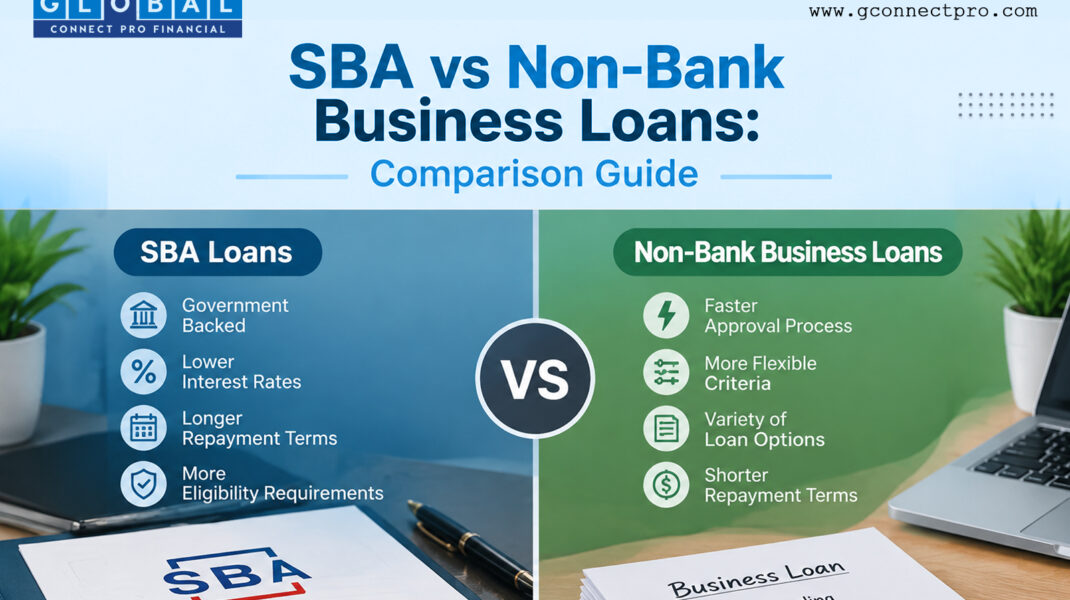
When comparing SBA vs non-bank loans, the biggest trade-off is speed versus cost. SBA loans are backed in part by the government, so they usually cost less over time and give you longer to pay, but they take weeks or even months to come through. Non-bank loans can land in your account within a few days, but you’ll usually pay more for that speed. Choose SBA for big, planned investments and non-bank funding for urgent needs.
This guide on SBA vs non-bank business loans is for small business owners who need funding and are stuck between two choices: apply for an SBA loan, or go with a non-bank lender. Use it when you’re planning a big purchase, covering a cash crunch, or trying to understand your options before you talk to a lender.
To write it, our team went through the SBA’s own loan pages and program rules, then compared both options side by side. The biggest difference turned out not to be price at all. It’s the timeline. So this guide skips the banking jargon and sticks to plain talk about time, cash flow and cost.
What Is an SBA Loan, in Plain English?
An SBA loan is a business loan from a regular bank or lender, where the U.S. Small Business Administration promises to cover part of it if the business can’t pay it back. According to the U.S. Small Business Administration, most of its loans are made through partner lenders, while the SBA sets the rules and guarantees part of each loan. In other words, the government usually isn’t handing you the money at all. It’s more like a co-signer standing behind you.
Why Do SBA Loans Have Stricter Rules?
That government backup makes lenders comfortable offering bigger amounts, longer terms and fairer pricing. The catch is that the program wants proof you’re solid. According to the SBA’s 7(a) loan rules, a business has to be creditworthy, show it can repay, and show it can’t get the credit it needs on reasonable terms from other sources. That’s why the paperwork is heavy and the review is slow.
What Other SBA Options Should You Know About?
There’s also a small-loan route. According to the SBA, its microloans of up to $50,000 are handed out through nonprofit community lenders rather than banks.
Have SBA Loan Rules Changed Recently?
Yes, several times in 2026. The 7(a) Small loan limit dropped from $500,000 to $350,000. On the other end, the SBA doubled the combined limit for 7(a) and 504 loans from $5 million to $10 million on July 4, 2026, according to its official news release. New rules for SBA business acquisition loans also took effect on October 1, 2026. Always check the latest version before you apply.
What Is a Non-Bank Business Loan?
A non-bank business loan comes from an online lender, finance company or funding marketplace rather than a traditional bank. These providers focus on how your business is doing right now, like monthly sales and deposits, instead of digging through years of history.
Why Are Non-Bank Lenders So Fast?
Speed is their selling point. Many of them can review an application within 1 to 3 business days, because the process is mostly online and the checks are simpler, often just 3 to 6 months of bank statements. The trade-off is price, since the extra risk gets passed on to you.
What Types of Non-Bank Funding Are There?
Common non-bank options include a short term loan for a one-time need, a business line of credit for ongoing cash flow, a merchant cash advance for businesses with steady card sales, and revenue-based financing, where repayments move up and down with your income.
How Do SBA and Non-Bank Business Loans Compare Side by Side?
| What Matters to You | SBA Loan | Non-Bank Loan |
|---|---|---|
| How fast you get the money | Slow, usually weeks to a few months | Fast, often within a few days |
| How much it costs overall | Usually less, because the government backing lowers the lender’s risk | Usually more, because the lender takes on more risk |
| How long you get to repay | Long, often several years | Short, often a few months to a couple of years |
| Paperwork | A lot: tax returns, financial statements, sometimes a business plan | Less: often bank statements and basic business details |
| Credit and history needed | Strong credit and a proven track record | More flexible, recent sales matter more |
| Best for | Big, planned investments | Urgent or short-term needs |
If you’re also weighing traditional banks against online lenders in general, our guide on bank and fintech lenders covers that side of the decision.
Why Does an SBA Loan Take So Long?
Two parties are involved: the lender and the federal program behind it. Before the guarantee applies, the lender must confirm you meet every rule and collect a stack of documents. One missing tax return or a confusing statement can add weeks.
Preparation is the fastest shortcut. Gather your last 2 years of tax returns, 12 months of bank statements, ownership details and a 1-page summary of how you’ll use the money. Our checklist of the documents most lenders ask for is a good place to start, and our team can help you get your SBA loan application ready so nothing gets stuck.
Why Do Non-Bank Loans Cost More?
These lenders take bigger chances. They approve companies banks often reject, review less history and wire money within days. To offset that risk, pricing climbs and repayment schedules shrink, sometimes to weekly or even daily debits.
So when you weigh SBA vs non-bank loans, the real question isn’t “which one is cheaper?” It’s “what is speed worth to my business right now?” If waiting 8 weeks means losing a big customer order, the higher cost is often worth it. If you have room to plan, patience pays off.
What Do Two Typical Examples Look Like?
Here’s how the choice plays out in two common situations.
Example 1: The Bakery With a Broken Oven
A small bakery’s main oven breaks down on a Monday, and it needs $25,000 to replace it before the weekend rush. Waiting 6 to 8 weeks for an SBA loan would mean weeks of lost sales. In this case, a fast non-bank loan or a line of credit makes more sense. The result: the bakery pays more in financing costs, but it’s back at full production within 5 days, which protects its income.
Example 2: The Restaurant Buying Its Building
A restaurant owner has been renting for years and wants to buy the building in 6 months. There’s no rush, and the amount is large. In this case, an SBA loan is the smarter move, because a longer repayment period keeps monthly payments manageable over 10 years or more. The result: a slower start, but a much lower total cost over the life of the loan.
Two businesses, two different answers. Timing and size made the call.
How Do You Decide Which One Is Right for You?
When we help business owners compare funding options, we start with these 5 questions:
- How soon do you need the money? Within days points to non-bank. Within months points to SBA.
- What is it for? Long-term assets like property or major equipment fit an SBA loan. Short-term needs like inventory, payroll or working capital gaps often fit non-bank options.
- How strong is your credit and history? If you’ve been in business 2+ years with good credit, an SBA loan is worth trying. If you’re newer, non-bank lenders are usually more realistic.
- Can your cash flow handle the payments? Weekly or daily payments can feel very different from one monthly payment.
- What’s the total cost? Always look at the full amount you’ll repay, not just the payment size.
One more tip: if you’re thinking about a line of credit, it’s worth understanding whether it can affect your personal credit before you sign.
Planning a Big Investment? Start Your SBA Loan the Right Way
Our team helps you prepare your documents so your application doesn’t get stuck.
Can You Use Both an SBA Loan and a Non-Bank Loan?
Yes. A common pattern is to cover today’s emergency with quick funding, then pursue SBA financing once things calm down. Some businesses even use an SBA loan later to refinance more expensive short-term debt, if they qualify. The result is a lower total cost, because the expensive short-term payments end and one longer, cheaper loan takes their place.
Avoid stacking several short-term products, because overlapping payments snowball. A simple habit helps: after 6 months, review what you’re paying each month and check whether refinancing makes sense.
Key Takeaways
- SBA loans cost less and last longer, but approval usually takes weeks to months.
- Non-bank loans can fund in 1 to 3 business days, but they cost more.
- Big, planned purchases fit SBA loans. Urgent or short-term needs fit non-bank options.
- Since July 2026, businesses can get up to $10 million combined through SBA 7(a) and 504 loans.
- Compare the total repayment and payment frequency, not just the monthly amount.
- Many owners use fast funding first, then refinance with an SBA loan later.
Conclusion: Which Is Better, SBA or Non-Bank Business Loans?
No single loan wins everywhere. SBA financing suits big, planned investments thanks to longer terms and lower overall cost. Non-bank funding shines when waiting isn’t an option, though speed carries a premium.
When comparing SBA vs non-bank business loans, start with two questions: how fast do you need the money, and how long do you need to pay it back? Answer those honestly, and the right choice usually becomes clear.
Not Sure Which Loan Fits Your Timeline?
Compare SBA and non-bank options side by side and find the right fit for your business.
This content is for educational purposes only and isn’t financial or legal advice. SBA rules change often, so confirm current requirements with your lender.
Frequently Asked Questions
Q1. What is the main difference between SBA and non-bank business loans?
The main difference between SBA vs non-bank loans is speed versus cost. SBA loans are partly backed by the government, so they usually cost less and give you longer to repay, but approval takes weeks or months. Non-bank loans can fund in a few days, but they usually cost more and have shorter terms.
Q2. Does the SBA give you the money directly?
Usually not. A partner lender, such as a bank or credit union, funds the loan, and the SBA guarantees a portion of it. That guarantee lowers the lender’s risk, which is why SBA loans can offer longer terms and lower costs than many other options.
Q3. How long does an SBA loan take?
An SBA loan usually takes several weeks to a few months from application to funding. The timeline depends on your lender, the loan type and how complete your paperwork is. Having tax returns, bank statements and ownership details ready can save weeks.
Q4. How fast can I get a non-bank business loan?
Many non-bank lenders can review your application and fund it within 1 to 3 business days. They move faster because the process is mostly online and they usually ask for fewer documents, often just 3 to 6 months of bank statements and basic business details.
Q5. Why are non-bank business loans more expensive?
Non-bank lenders take on more risk. They approve businesses that banks often turn down, review less history and send money within days. To cover that risk, they charge more and use shorter repayment schedules, sometimes with weekly or daily payments.
Q6. Which is better for buying property or big equipment?
An SBA loan is usually the better choice for property or major equipment. These are long-term assets, and the longer SBA repayment term keeps each payment smaller. The lower overall cost also adds up to big savings over the life of the loan.
Q7. Which is better for an urgent expense?
A non-bank loan or a business line of credit is usually better for urgent expenses, because the money can arrive in days. Waiting weeks for an SBA loan could cost you more in lost sales or missed opportunities than the extra financing cost.
Q8. Can a new business get an SBA loan?
It’s possible, but harder. SBA lenders usually want a track record, strong credit and proof you can repay. Businesses under 2 years old often qualify more easily with non-bank lenders, or with SBA microloans of up to $50,000 through nonprofit lenders.
Q9. Can I use both an SBA loan and a non-bank loan?
Yes. Many owners use quick non-bank funding for emergencies and SBA financing for bigger plans. Some later refinance expensive short-term debt with an SBA loan to lower their total cost. Just avoid stacking several short-term products at once.
Q10. What should I compare before choosing a business loan?
Compare the total repayment amount, payment frequency, term length, fees and any collateral required. Looking only at the monthly payment can hide the real cost, so always ask the lender for the full amount you’ll repay over the life of the loan.